
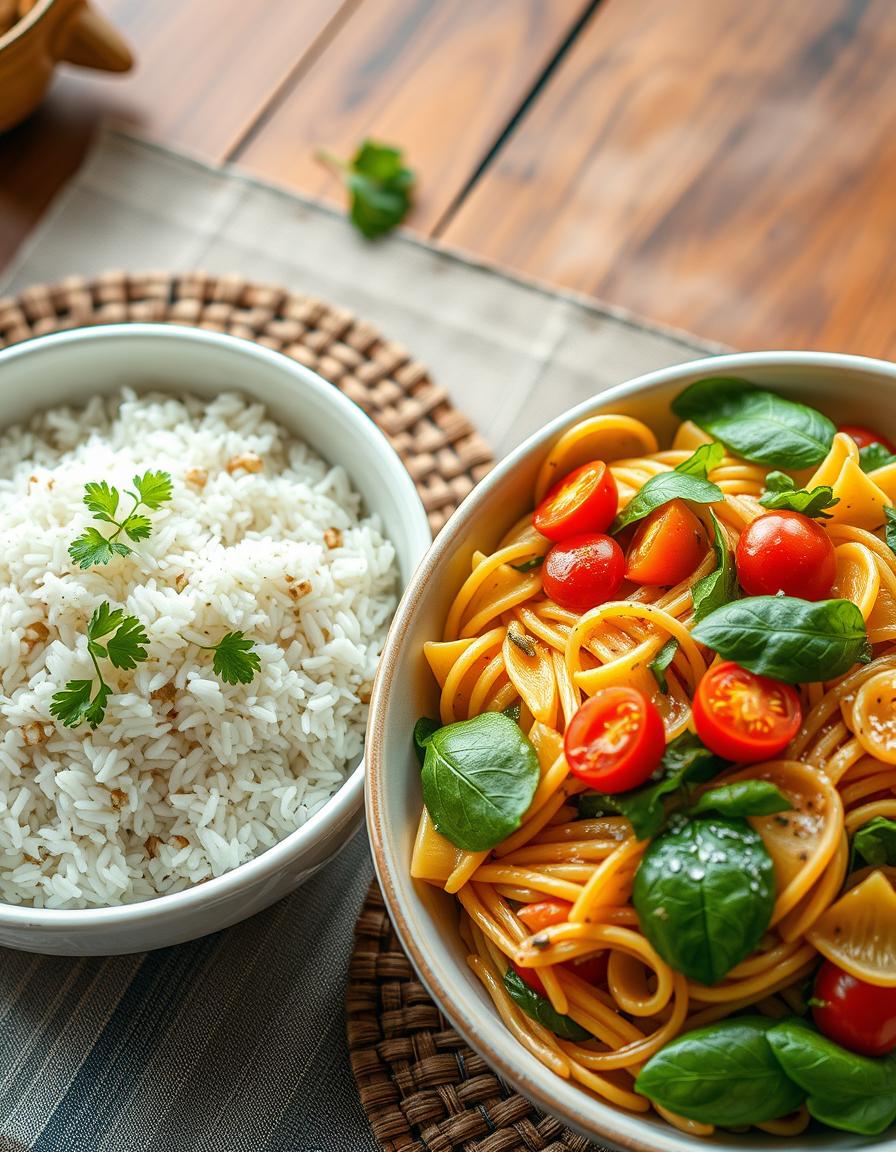
Rice and pasta are both staple foods found in kitchens around the globe. They are versatile, filling, and easy to prepare, but the question many people ask is, is rice healthier than pasta? While they share some similarities, their nutritional profiles differ in ways that might influence your choice depending on your health goals. Whether you’re aiming to lose weight, manage blood sugar, or simply eat more balanced meals, understanding these differences can help make smarter decisions.
Nutritional Overview
To understand if rice is healthier than pasta, it helps to look at the basic nutrition facts of each. Both rice and pasta mainly provide carbohydrates, which serve as a primary energy source for the body. But beyond that, their fiber, protein, vitamin, and mineral contents vary quite a bit.
| Nutrient | Cooked White Rice (1 cup, 158g) | Cooked White Pasta (1 cup, 140g) |
|---|---|---|
| Calories | 205 kcal | 221 kcal |
| Carbohydrates | 45 g | 43 g |
| Protein | 4.3 g | 8 g |
| Fat | 0.4 g | 1.3 g |
| Fiber | 0.6 g | 2.5 g |
| Iron | 1.9 mg (10% DV) | 0.9 mg (5% DV) |
From this snapshot, pasta seems to provide more protein and fiber per serving, while rice has fewer calories and fat. However, this is white rice and white pasta. The story changes when choosing whole grain varieties.
White vs. Whole Grain: The Health Factor
Many people grab white rice or regular pasta without considering whole grain options. Whole grains are less processed, keeping more fiber, vitamins, and minerals intact. This affects digestion, blood sugar, and satiety.
- Whole Grain Pasta: Made from whole wheat, it contains up to three times more fiber than white pasta. This slows digestion and helps keep blood sugar steady.
- Brown Rice: This retains the bran and germ, offering more fiber and nutrients than white rice but only slightly more calories.
The increased fiber in whole grains supports gut health and may help in weight management by making you feel full longer. For those questioning is rice healthier than pasta, opting for the whole grain variety in either can make a big difference.
Protein Power Comparison
Protein is essential for muscle repair, immune function, and keeping hunger at bay. When comparing rice and pasta, pasta often comes out ahead in protein count, especially if it’s whole grain.
- One cup of cooked whole wheat pasta boasts about 7-8 grams of protein.
- Brown rice offers around 5 grams of protein per cup.
For vegetarians or those wanting to increase protein without meat, whole grain pasta may be the better choice. However, combining rice or pasta with beans, lentils, or veggies can elevate the overall protein quality of your meal.
Glycemic Index and Blood Sugar Impact
If you’ve ever wondered is rice healthier than pasta when it comes to blood sugar, then glycemic index (GI) is a key consideration. GI measures how quickly a food raises blood sugar levels after eating.
- White Rice: Generally has a high GI, meaning it digests quickly and causes blood sugar spikes, especially varieties like jasmine rice.
- White Pasta: Usually has a medium to low GI due to its denser structure, slowing digestion.
- Whole Grain Pasta and Brown Rice: Both tend to have lower GI values, making them better options for blood sugar control.
For people managing diabetes or insulin sensitivity, pasta might slightly edge out rice in helping maintain steadier blood sugar levels, but whole grain choices in either category are best.
Vitamins, Minerals, and Antioxidants
Rice, especially brown rice, contains minerals like magnesium, phosphorus, and manganese. Pasta, especially when enriched or whole grain, provides B vitamins, iron, and folate.
- Brown rice shines with its antioxidant content, thanks to the bran layer, which white pasta lacks.
- Fortified pasta often has added vitamins that rice doesn’t naturally provide.
This means both can fit into a nutrient-rich diet, but it depends on your specific nutritional needs and the type of rice or pasta you select.
Calorie Content for Weight Management
Weight watchers often ask is rice healthier than pasta because calories matter. Surprisingly, both are similar in calories, but cooking methods and portion sizes can tip the scales.
| Food | Calories (1 cup cooked) | Typical Serving Size |
|---|---|---|
| White Rice | 205 kcal | 1 cup (158g) |
| White Pasta | 221 kcal | 1 cup (140g) |
| Brown Rice | 216 kcal | 1 cup (195g) |
| Whole Wheat Pasta | 174 kcal | 1 cup (126g) |
Notice that whole wheat pasta is slightly lower in calories per cup than brown rice. Watching portion sizes and how you cook (avoiding excess oils or heavy sauces) ensures your meal stays balanced and calorie-conscious.
Digestibility and Food Sensitivities
Some people find rice easier to digest than pasta. Rice is naturally gluten-free, making it a safe bet for those with celiac disease or gluten sensitivity. Pasta, unless specified gluten-free, contains wheat and can cause discomfort to sensitive individuals.
For those wondering is rice healthier than pasta for digestion, rice can be gentler on the stomach and less likely to cause bloating or gas.
Cooking Versatility and Culinary Uses
While not nutritional, the flexibility of rice and pasta can influence your diet and meal satisfaction. Rice adapts well to stir-fries, curries, and soups, while pasta shines in Italian dishes, cold salads, and quick sautéed meals.
Including a variety of whole grains, including rice and pasta, in your diet supports diversity, which is great for gut health and overall nutrition. For couples prioritizing wellness, focusing on healthy nutrition for couples can mean exploring both options and finding what suits their tastes and goals best.
Summary Table: Is Rice Healthier Than Pasta?
| Aspect | Rice | Pasta |
|---|---|---|
| Calories (per 1 cup) | 205 (white), 216 (brown) | 221 (white), 174 (whole wheat) |
| Protein | 4-5g | 7-8g |
| Fiber | 0.6g (white), 3.5g (brown) | 2.5g (white), 6g (whole wheat) |
| Glycemic Index (GI) | Medium-High | Low-Medium |
| Gluten-Free | Yes | No (unless gluten-free type) |
| Micronutrients | More antioxidants and minerals in brown rice | More B vitamins and iron in whole grain/enriched pasta |
Conclusion
So, is rice healthier than pasta? The answer isn’t black and white. It largely depends on the type you choose and your personal health goals. Whole grain pasta generally provides more protein and fiber, with a lower glycemic impact than white rice. On the flip side, rice offers a gluten-free alternative and more antioxidants if you pick brown rice. Both can be part of a healthy diet when eaten in moderation and combined with nutrient-rich foods.
Next time you face the rice or pasta dilemma, think about your individual needs—whether it’s managing blood sugar, increasing protein intake, or simply enjoying a delicious meal. Whichever you pick, ensuring balance and variety will always steer you toward the best nutrition.

Hey, I’m Zara! I’m all about simple, healthy living and feeling your best every day. On this blog, I share easy wellness tips, real talk about health, and small changes that make a big difference. Let’s keep it real, stay inspired, and feel good, together.