

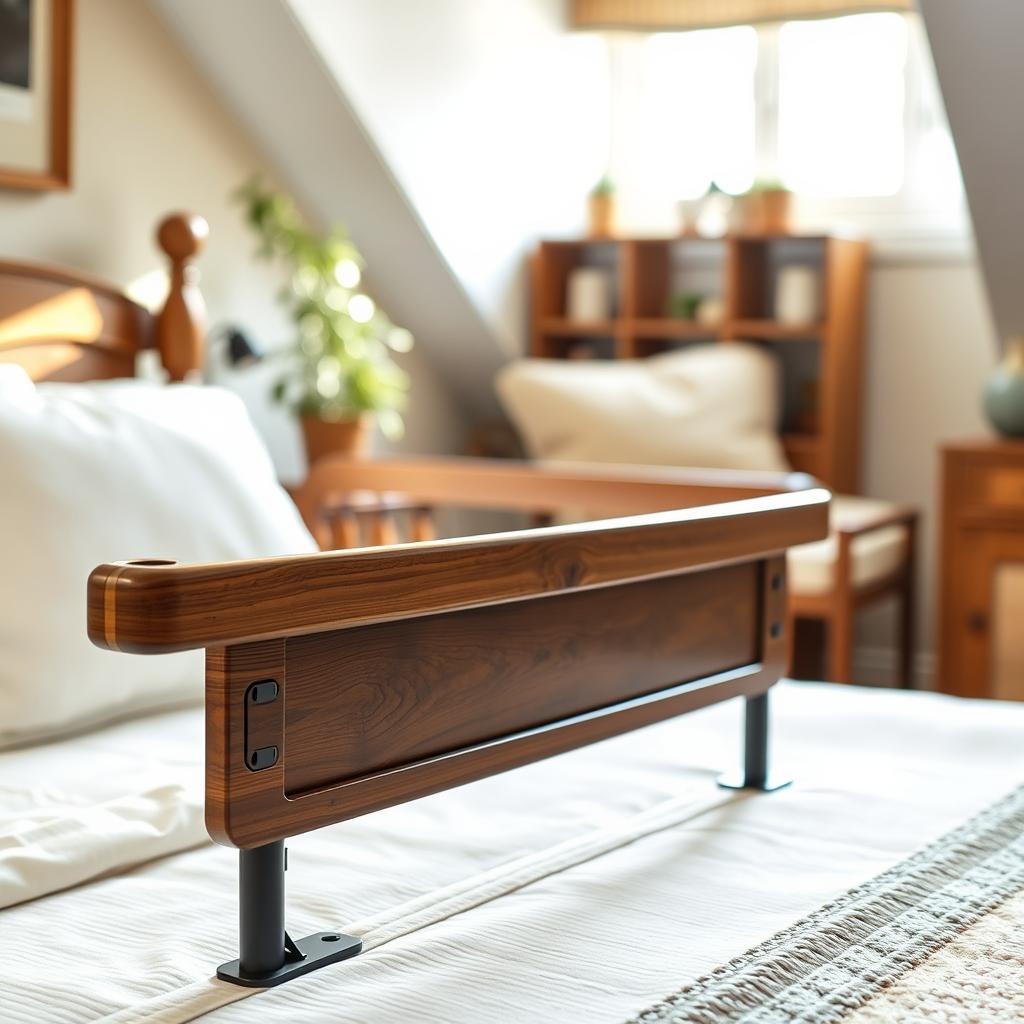
A peaceful night’s sleep is essential for health and well being, but for many older adults, the bedroom can become a source of anxiety. The fear of falling out of bed or the struggle to get up without assistance can disrupt rest and reduce confidence. Fortunately, a simple and effective solution exists to restore both safety and independence: high quality bed rails for seniors. These supportive devices are more than just a barrier, they are tools that empower individuals to move safely in their own space, providing peace of mind for both them and their loved ones. Understanding the different options and how to select the right one is the first step toward creating a safer sleeping environment.
What Exactly Are Bed Rails for Seniors?
When you hear “bed rails,” you might picture the long, cage like rails on a hospital bed. However, bed rails for seniors designed for home use are quite different. They are specialized safety and mobility aids that attach to a regular home bed frame or slide under the mattress. Their primary goals are to prevent accidental falls from bed during the night and to offer a stable handhold for sitting up, repositioning, and getting in and out of bed safely. These devices are often called bed assist rails, adult bed rails, or bed safety handles, but their function remains the same: to provide stability where it’s needed most.
The Key Benefits of Using Bed Safety Rails
Installing the right bed rails for seniors can have an immediate and positive impact on daily life. The advantages go beyond simple fall prevention and touch upon physical ability and emotional well being.
Enhancing Safety and Preventing Falls
Falls are a leading cause of injury among older adults, and many of these incidents happen at home, often during the night. A person might roll over too far while sleeping or become disoriented when waking up in the dark. Bed rails for seniors create a gentle, physical reminder of the bed’s edge, effectively preventing these dangerous tumbles. This simple barrier can be the difference between a restful night and a trip to the emergency room.
Promoting Independence and Confidence
Losing the ability to get out of bed without help can feel discouraging. A bed rail provides a sturdy, reliable point of leverage, allowing a person to push or pull themselves into a sitting or standing position on their own terms. This small act of self sufficiency can dramatically boost confidence and preserve a sense of independence, which is vital for mental and emotional health. Many find that quality bed rails for seniors are a key part of aging in place comfortably.
Assisting with Mobility and Repositioning
For individuals who have difficulty changing positions in bed, a rail can be an invaluable tool. It offers a firm grip to help with rolling over, adjusting position to relieve pressure points, or pulling up from a lying down position. This reduces the physical strain on the user’s back, arms, and legs, and can also lessen the physical burden on caregivers who might otherwise need to provide assistance for these small movements. The right bed rails for seniors make the bed a more manageable space.
Understanding the Different Types of Bed Rails for Seniors
Not all bed rails are created equal. They come in various shapes and sizes, each suited for different needs. Choosing the correct type is the most important step in finding a safe and effective solution. The market for bed rails for seniors is diverse, so understanding the main categories is essential.
Bedside Handles / Assist Rails
These are the most compact type of bed rails for seniors. Shaped like an “M” or a small loop, they are designed primarily as a support handle for getting in and out of bed. They are less about fall prevention and more about mobility assistance. They typically slide under the mattress and are secured with a strap to the other side of the bed frame. They are an excellent choice for individuals who are stable while sleeping but just need a little extra help with transitions.
Half Length Bed Rails
Offering a balance between safety and accessibility, half length rails cover the upper half of the bed. This design prevents rolling out of bed from the torso area, where most falls originate, while leaving the lower half of the bed open. This opening makes it easy to get out of bed without needing to lower the rail. These versatile bed rails for seniors are a popular choice for those who need both fall protection and mobility support.
Full Length Bed Rails
As the name suggests, these rails extend along the entire length of the bed. They offer the maximum level of protection against falls and are often recommended for individuals with significant mobility challenges, cognitive conditions like dementia, or those who are particularly restless sleepers. While they provide a high level of security, it’s important to consider that some users may feel confined by them. Proper fitting is critical to avoid safety risks.
Leg Supported and Freestanding Rails
Some bed rails for seniors come with legs that extend to the floor for added stability. This design is particularly useful for heavier individuals or for use with beds where a standard under mattress installation might not feel secure enough. The legs provide an extra anchor point, making the rail exceptionally sturdy. The main downside is that the legs can sometimes become a trip hazard for others in the room.
| Rail Type | Primary Use | Pros | Cons |
|---|---|---|---|
| Bedside Handle / Assist Rail | Mobility & Standing Aid | Minimalist, easy to use, great for independence | Does not prevent falls from rolling |
| Half Length Bed Rail | Fall Prevention & Mobility | Good balance of safety and access | May not be enough for very restless sleepers |
| Full Length Bed Rail | Maximum Fall Prevention | Highest level of protection | Can feel confining, higher entrapment risk if not fitted perfectly |
| Leg Supported Rail | Bariatric Support & Stability | Extremely stable and secure | Legs can be a trip hazard |
How to Choose the Perfect Bed Rails for Seniors: A Step by Step Guide
Selecting the right bed rails for seniors requires careful consideration of the user, their bed, and their environment. Following a logical process can help you make a confident and safe choice.
Step 1: Assess the User’s Needs
First, think about the primary reason for the rail.
- Mobility Level: Does the person primarily need a handhold to help them stand up, or do they need a barrier to prevent them from rolling out of bed? If it’s just for assistance, a bedside handle is likely sufficient. If fall prevention is the main goal, a half length or full length rail is a better choice.
- Cognitive State: For an individual with dementia or confusion, a full length rail might be misinterpreted as something to be climbed over, which could lead to a more serious fall. In these cases, a lower profile half rail or alternative solutions like a bed alarm might be safer.
- Weight and Strength: Check the weight capacity of any bed rails for seniors you are considering. A bariatric user will need a rail with a higher weight limit and possibly one with floor supporting legs for extra stability.
Step 2: Check Bed and Mattress Compatibility
Not all bed rails for seniors work with all beds. It’s crucial to check compatibility before purchasing.
- Bed Type: Do you have a traditional bed with a box spring, a platform bed, or an adjustable bed? Adjustable beds are particularly tricky, as the rail must be able to move with the bed without creating dangerous gaps. Look for rails specifically marketed as compatible with adjustable beds.
- Mattress Thickness: The height of the rail above the mattress is very important. If the mattress is too thick, the rail may not be tall enough to provide adequate protection. Measure your mattress depth and compare it to the rail’s specifications.
- Bed Size: Most rails are designed to be versatile, but you should confirm they work with your bed size, whether it’s a Twin, Full, Queen, or King. The securing straps need to be long enough to fit properly.
Step 3: Prioritize Safety Features
Safety should always be the top priority. When evaluating different bed rails for seniors, look for features that minimize risk. A secure attachment system, often involving safety straps that buckle around the bed frame or mattress foundation, is non negotiable. It prevents the rail from shifting or creating a gap. Also, check the construction, there should be no sharp edges or pinch points.
Safety First: Understanding and Avoiding Entrapment Risks
The most serious risk associated with any bed rails for seniors is entrapment. This occurs when a person gets wedged between the bed rail and the mattress, or between the bars of the rail itself. The U.S. Food and Drug Administration (FDA) has identified several potential zones of entrapment. To prevent this, proper installation and fit are absolutely critical.
Here are key steps to avoid this danger:
- Eliminate Gaps: The single most important safety check is to make sure there is no gap between the side of the mattress and the bed rail. The mattress should be pressed firmly against the rail. If you can fit a soda can between them, the gap is too large.
- Follow Instructions: Always install the bed rails for seniors according to the manufacturer’s directions. Do not improvise. Pay close attention to how the safety straps should be tightened.
- Use the Right Mattress: Use a mattress that fits the bed frame snugly. An undersized mattress can slide and create a dangerous gap next to the rail.
- Regular Checks: Periodically check that the bed rail is still securely in place and that no new gaps have formed.
A Look at Popular Bed Rails for Seniors in 2025
To give you a better idea of what’s available, here are a few popular and well regarded models. All information is current as of September 16, 2025.
Stander EZ Adjust Bed Rail
This is one of the most versatile bed rails for seniors on the market. Its key feature is the ability to adjust in length (from 26 to 42 inches) after installation. It also pivots downward 180 degrees, allowing easy access to the bed. It secures to the bed frame with a safety strap.
Best for: Users who need a flexible solution that can be a short handle or a longer rail.
Price: Retails for approximately $119.99 on the official Stander website.
Drive Medical Home Bed Assist Handle
This is a simple, no frills mobility aid. It features a basic handle design with a non slip grip and is extremely easy to assemble without tools. Its base slides between the mattress and box spring, with a single strap for security.
Best for: Individuals who just need a sturdy handle to help them stand.
Price: Available for around $45 on major retail sites and the Drive Medical site.
Vive Health Bed Rail
This model combines a bed rail with floor standing legs for superior stability. It has an adjustable handle height and includes a handy organizer pouch. The legs can be adjusted to match the height of the bed.
Best for: Those needing extra stability and a higher weight capacity.
Price: The Vive Health website lists this model starting at $74.99.
Frequently Asked Questions (FAQ)
Will Medicare pay for bed rails for seniors?
This is a common but complex question. Medicare Part B may cover bed rails for seniors if they are prescribed by a doctor and deemed “durable medical equipment” (DME) that is medically necessary. However, if the rail is considered a “restraint” rather than a mobility aid, it is often not covered. Coverage can be inconsistent, so it’s best to speak directly with your doctor and a Medicare representative.
Are bed rails safe for people with dementia or Alzheimer’s?
This depends on the individual. For some, a rail provides needed security. For others, especially if they are prone to agitation or confusion, they may try to climb over the rail, increasing the risk of a more severe fall. In such cases, alternatives like a lowering the bed, using concave mattresses, or placing mats on the floor may be safer. A consultation with an occupational therapist is highly recommended.
How do I properly install bed rails for seniors?
Always start by reading the manufacturer’s manual from cover to cover. Generally, the base of the rail slides between the mattress and the box spring or platform. Then, a safety strap is run to the other side of the bed and buckled tightly to the bed frame, pulling the rail snugly against the mattress. The final, critical step is to check for any gaps.
Can I use bed rails on an adjustable bed?
Yes, but you must use bed rails for seniors specifically designed for adjustable beds. A standard rail will not move with the bed, creating dangerous gaps when the head or foot of the bed is raised. Look for models that attach to the mattress platform itself or are certified by the manufacturer as compatible with adjustable frames.
Conclusion
Choosing the right bed rails for seniors is a thoughtful process that can profoundly enhance safety, confidence, and independence. By understanding the different types available, assessing the specific needs of the user, and prioritizing a secure, gap free installation, you can provide a simple tool that makes a world of difference. These devices are more than just metal and plastic, they are a support system that enables older adults to rest easier and navigate their personal space with greater freedom. Making an informed choice ensures that the bed remains a place of comfort and security for years to come.
